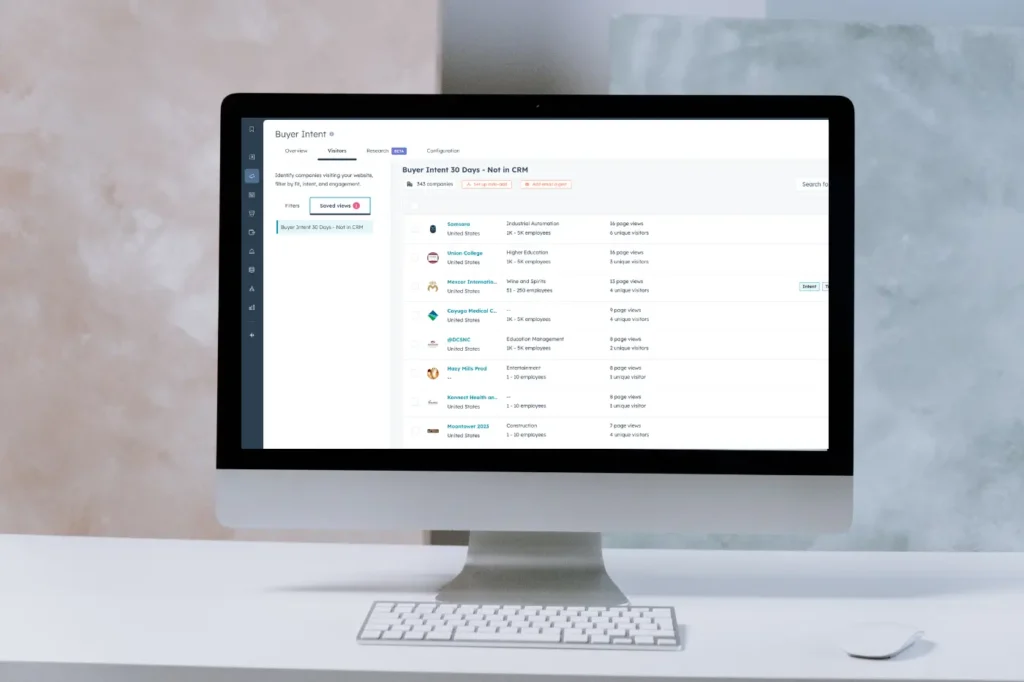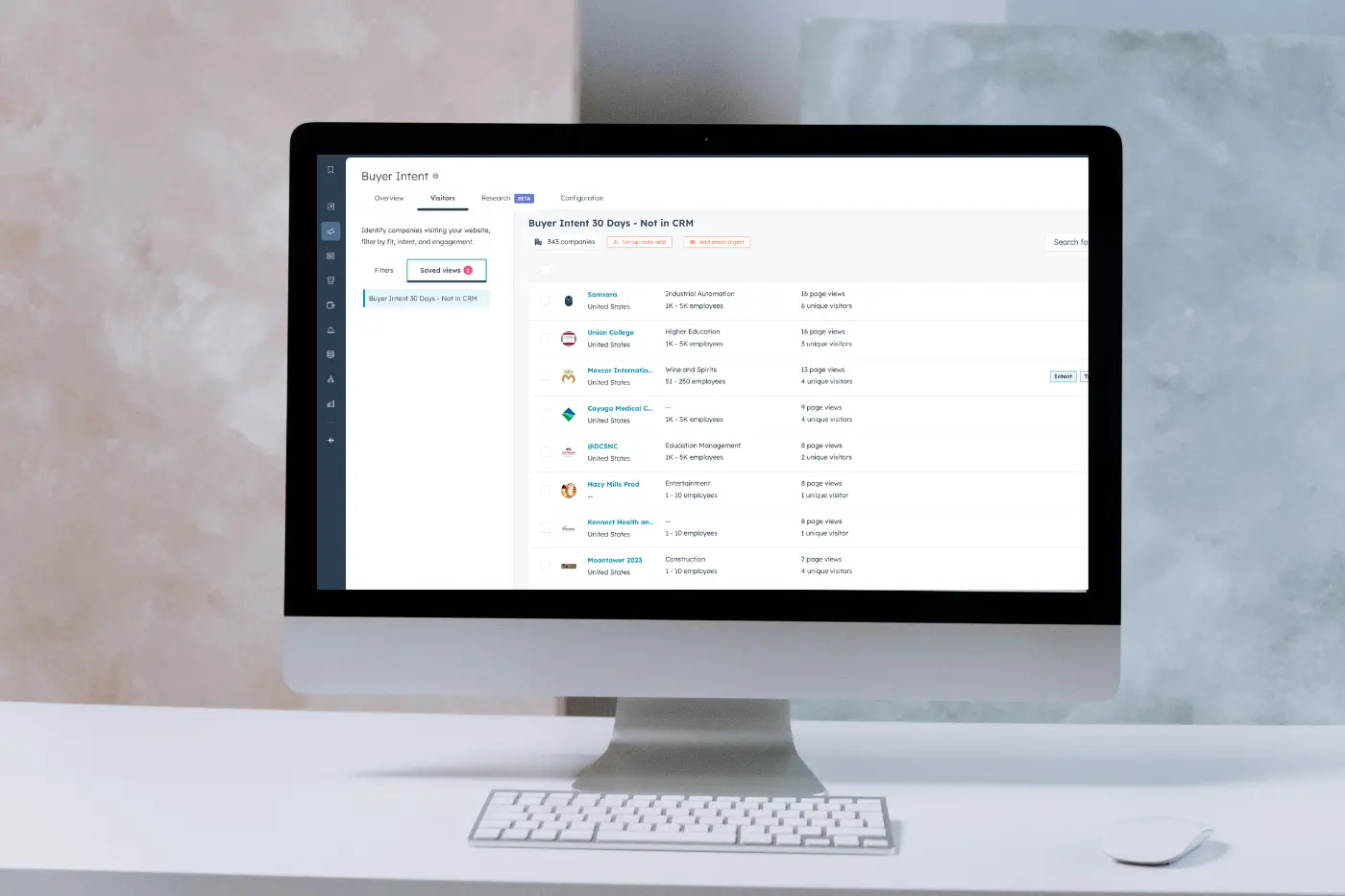

Outcome-based sales and marketing strategies shift your team away from the traditional focus on lead volume. Your sales and marketing teams will focus less on high-volume lead generation and more on lead quality, prioritizing product or service <> solution fit, deal size, and conversion rates down the funnel.
Outcome-based sales and marketing is a revenue-centric approach that weighs business outcomes, like generated revenue or pipeline influenced, rather than traditional volume-based metrics like clicks, leads, or impressions. This model shifts the focus away from promoting product characteristics to discovering and solving customer pain points.
The shift from traditional to outcome-based strategies rewrites the playbook across a few core areas:
- In Sales, reps now act as business partners and consultants. Instead of pitching features, they can show how a product or service directly helps the buyer achieve specific business goals, reduce risk, and increase long-term ROI.
- In Marketing, campaigns and budgets now align with achieving revenue growth, rather than simple reach or clicks. Marketers track lead quality, opportunity creation, deal velocity, and closed-won metrics, instead of tracking how many top-of-funnel forms are filled out.
- Alignment: Sales and marketing share a unified set of outcome-based targets, allowing the organization to determine exactly what campaigns generate paying customers.
At Peer Sales Agency, our observation is that with outcome-based sales and marketing, your pipeline becomes a question of quality over quantity. In the past, your revenue operations team would reverse-engineer your deal goals to ladder back to the necessary lead-generation KPIs and come up with a number of minimally qualified leads that marketing (or maybe a BDR team) was responsible for generating.
When you’re switching gears to outcome-based sales and marketing, your sales and marketing teams will work as a more unified team – deciding on your top-priority ideal customer profile, the buying personas within those companies, how you’ll make inroads, the product or service that best fits their needs, and the deal sizes and types both teams will prioritize. Instead of developing many lead generation and lifecycle stage conversion gates, your team starts with your leads in mind, crafts a solution to solve their top problem, and reaches out with the help they need.
How to shift from volume-based lead generation to outcome-based sales and marketing.
The shift from traditional sales and marketing motions to a new, revenue-aligned system that helps you generate more net new revenue and grow opportunities within your existing client base can be a detailed one. You’ll need to identify your ideal customer profile, research the buying personas within those companies and understand how, when, and where they make purchase decisions – and of course, you’ll need to find the real people in those companies. And that’s all before you start crafting your offer, outreach, and campaign.
Peer Sales Agency is here to help. With our repeatable revenue engine process, we can help you identify your market, define your unique selling propositions, and lay the foundation for modern sales and marketing. It starts with a simple conversation – tell us your goals and challenges, and we’ll help you figure out the next steps.
Outcome-based sales & marketing is all about alignment.
“The integrated approach to outcome-based sales is about meeting together. To have, on a regular cadence, a shared measurement of success and a real alignment on who you’re trying to reach, what you’re offering them, and what it means to be their chosen solution. In those meetings, it’s about having an open dialogue. What are you hearing in your sales conversations?”
Sara Hanlon, as featured on the Predictive ROI Podcast
With outcome-based sales and marketing, we’ve seen sales and marketing teams achieve:
- 150% increase in new client acquisition YOY
- 280% increase in MQL rate YOY
- 122% annual revenue growth
Why Doesn’t Volume-Based Lead Generation Work for Modern Sales & Marketing?
It’s less that volume-based lead gen doesn’t work and more that it can be tedious and expensive. For example, if your goal is to land four new logos by Q2, when crafting a volume-based lead generation campaign strategy, you would:
- Look at your closed won vs total deals opened percentage for the last year. How many total deals will you need to open to win four more on your goal timeline?
- Take a look at your conversion rates from MQL to SQL and SQL to Deal. What percentage of MQLs become SQLs? What percentage of SQLs become Deals?
- If you got 100 MQLs last year, and 25 became SQLs, you have a 25% conversion rate at that stage.
- If 12 of those 25 SQLs became Deals, your conversion rate is about 50% at that stage.
- If 4 of those Deals went to Closed Won, you have a 25% win rate.
Using those numbers, you would need to craft a campaign that lands 100 new MQLs. Continuing up the funnel with that reverse engineering, your marketing team will need to calculate:
- How many marketing touches are required to generate one lead?
- For cold outreach, this is 20-50 touches.
- For warmer, inbound leads, this is 6-15 touches.
- How many generated leads become Marketing Qualified Leads?
- The average, healthy conversion rate is 35%
So, to qualify 100 MQLs, you’ll need to generate 286 leads. That’s a lot of leads, and the cost could be high. The average B2B cost per lead (CPL) is $205.50… and that means you’re looking at a $60,000 lead generation campaign just to hit those volume-based goals. And that doesn’t include the cost of marketing manpower or sales team time.
How does outcome-based sales & marketing change the process for my B2B marketing team?
Outcome-based marketing requires a big mindset shift for your marketing team. Instead of focusing on brand reach metrics, social media and website performance, and top-level ad metrics, your marketing team will need to drill into the revenue goals for your business and craft strategies and sales enablement that help sales reps hit that target.
Your marketing team will stop tracking top-of-funnel form fills as its main performance metric. Instead, their KPIs will shift to pipeline influence, account engagement, deal win rates, and customer expansion.
Your marketing team will lead the charge in sales-marketing alignment, setting meetings and ensuring that the sales team is passing back relevant information about leads, opportunities, deals, market shifts, and new problems or pain points in your market.
Last but not least, your marketing team will need to understand (and have real access to) full-funnel attribution data. Marketing will track its impact beyond initial touchpoints, helping sales map content to the buyer’s journey, and weighing engagement metrics against closed-won deals and total customer lifetime value.
How does outcome-based sales & marketing change the process for my sales team?
Outcome-based sales and marketing should feel more natural for your sales reps to pick up, especially in structures where sales mean commission – your reps are already used to focusing on the revenue impact of their sales activities. With outcome-based sales, the real shift will be all about the approach: your reps must go from promoting features and making price-based offers to solving business problems and making value-based sales propositions that don’t undercut your pricing.
The sales team will start with consultative discovery and co-creation of solutions with their SQLs and opportunities. With outcome-based sales, reps conduct deep discovery to uncover each buyer’s unique pain points and the business’s operational goals. Your sales team needs to collaborate directly with the customer to co-create a tailored solution designed to achieve a specific target outcome that has an impact on the customer’s bottom line: like “Our platform will cut your onboarding time by 20 days.”
The way the sales team discovers and receives leads will change, too. Instead of marketing shipping a high volume of leads and the sales team chasing numbers, marketing now tracks intent data, buyer committee engagement, and actual pipeline acceleration. The team prioritizes quality and readiness signals, ensuring sales receives highly qualified prospects who are already educated on the value of the expected business outcome.
For sales teams using outcome-based sales and marketing tactics, their metrics focus on deal velocity, win rates, and long-term customer success. Reps and clients establish shared benchmarks to measure success post-sale, building trust that leads directly to future upsells, renewals, and referrals.
How does outcome-based sales & marketing change the importance of sales <> marketing alignment?
Outcome-based sales and marketing relies completely on sales-marketing alignment to be successful. Teams must share data, goals, and accountability. Both teams need to commit to and achieve the necessary data collection and entry into a CRM to enable this process.
When the goal is revenue, and everyone is rowing together, the blame game disappears. Sales can’t blame marketing for low-quality leads because sales is directly communicating and measuring outcomes with specific types of leads, and those measurements influence the marketing campaigns designed to pull leads closer.
Getting your teams on the same page is worth it. Research shows that organizations with strong, outcome-driven sales and marketing alignment achieve up to 208% higher marketing-generated revenue and 36% higher customer retention rates.
Trust Signals
“Peer has not only been an incredible marketing arm for our business—they dramatically improved our sales process at the same time. As the leads started to increase, Peer worked directly with the sales team to ensure no balls dropped out of the funnel. They’re all about growing revenue, supporting sales, and telling a good story to our buyers.”
TY LISIECKI, PRESIDENT and FOUNDER
See how outcome-based sales and marketing helped Ty’s Outdoor Power grow revenue by 122%.
Make the shift from expensive lead generation to efficient outcome-based sales and marketing.
The shift from traditional sales and marketing motions to a new, revenue-aligned system that helps you generate more net new revenue and grow opportunities within your existing client base can be a detailed one. You’ll need to identify your ideal customer profile, research the buying personas within those companies and understand how, when, and where they make purchase decisions – and of course, you’ll need to find the real people in those companies. And that’s all before you start crafting your offer, outreach, and campaign.
Peer Sales Agency is here to help. With our repeatable revenue engine process, we can help you identify your market, define your unique selling propositions, and lay the foundation for modern sales and marketing. It starts with a simple conversation – tell us your goals and challenges, and we’ll help you figure out the next steps.
Four frequently asked questions about outcome-based sales and marketing
Traditional sales are all about the pitch: reps focus on features and product or service specifications and customers match those features to their own needs. Outcome-based models focus entirely on the ultimate business value the customer wants to achieve (e.g., increased revenue, efficiency, or ROI). In marketing, this shifts the focus from vanity metrics (likes, impressions, or clicks) to true pipeline generation and customer retention.
It really comes down to revenue growth. Success is measured using full-funnel and revenue-based metrics rather than activity- or reach-based metrics. Key performance indicators (KPIs) include deal velocity, opportunity creation, pipeline generated, customer lifetime value (LTV), and return on ad spend (ROAS).
Sales-marketing alignment is achieved by mapping every marketing and sales touchpoint to the same shared outcome, typically pipeline contribution or closed-won revenue. Both departments utilize the same CRM and attribution tools to understand which content and conversations influence the buyer’s journey from start to finish.
Buyer’s Journey Mapping is essential for alignment. Use this Buyer’s Journey Map template to create a living document that helps sales and marketing teams get (and stay) on the same page.
Verifying outcomes requires a robust data and attribution infrastructure (such as multi-touch attribution platforms or AI) to fairly credit sales conversations and marketing campaigns for the resulting business wins. You’ll need a CRM with sales and marketing tools designed to facilitate alignment, and you’ll need to establish concrete guidelines for data entry, cleanliness, and automation wherever possible.
This ensures all parties are accountable and helps avoid disputes regarding which variables drove the final result.