
Customer Lifecycle Marketing, Defined
Customer lifecycle marketing is a strategy that engages customers at every stage of their relationship with a brand — from first awareness through purchase, retention, and advocacy. Unlike traditional linear marketing, it treats the customer journey as an ongoing loop, using targeted content and communication to deepen loyalty and reduce churn.
At Peer Sales Agency, all customer lifecycle marketing starts with defining that lifecycle and mapping psychographic, demographic, and buyer-behavior research to create what we call our Buyer Journey Map.
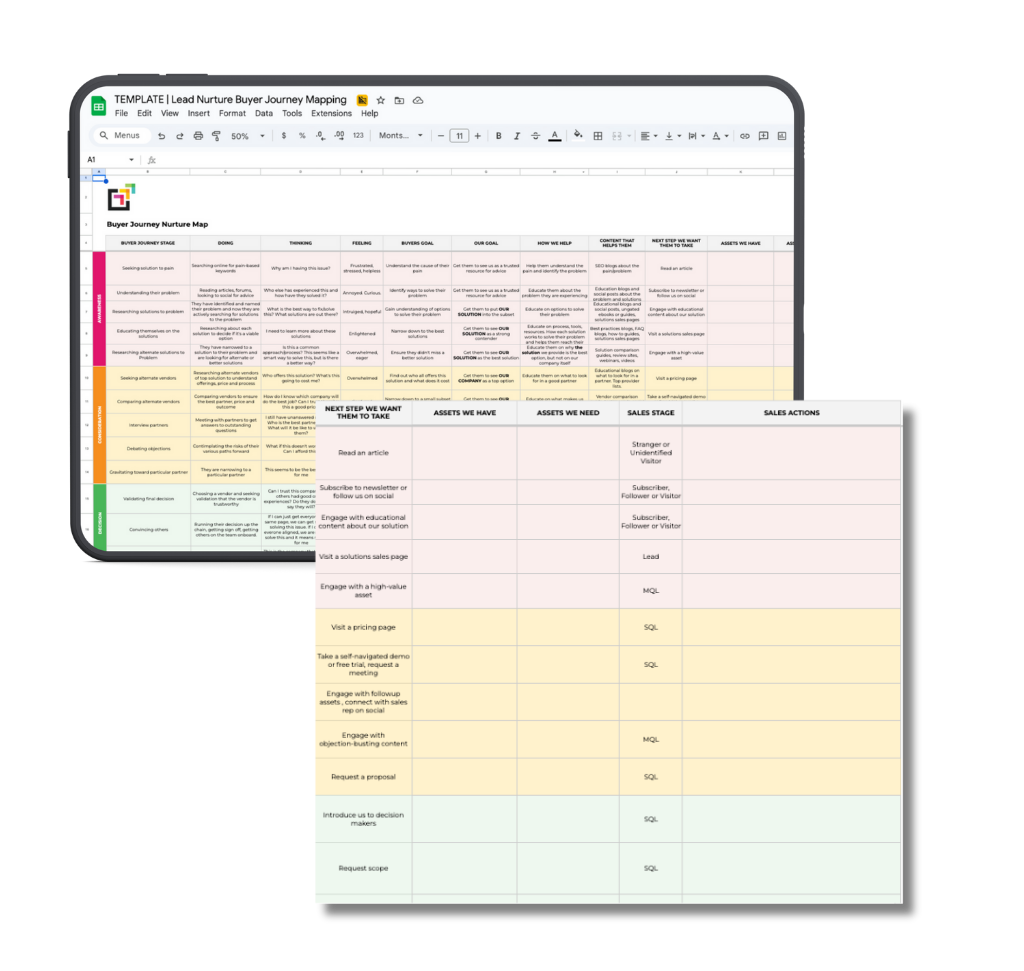
These maps are essential guidelines to help marketing, sales, and customer success teams understand the thoughts, feelings, and goals of their prospects or customers throughout the lifecycle.
Once you understand those things, you can create the kind of content, sales enablement, and customer success materials that turn strangers into evangelists in no time.
Key Takeaways
- Customer lifecycle marketing covers three core phases: Acquire, Engage, and Retain.
- The goal is to turn customers into long-term advocates, not just one-time buyers.
- B2B lifecycle marketing requires ongoing education, proactive outreach, and loyalty programs.
- Best practices include personalized messaging, onboarding support, and behavior-based reporting.
Not long ago, the typical customer lifecycle was measured in a sequence of three events:
- Get excited and buy your service
- Become a loyal customer
- Get bored or disappointed and stop your service.
Today, customer lifecycle marketing is how leading organizations turn short-term customers into long-term advocates. In the world of B2B sales, this requires more than a linear marketing plan that ends after the onboarding process.
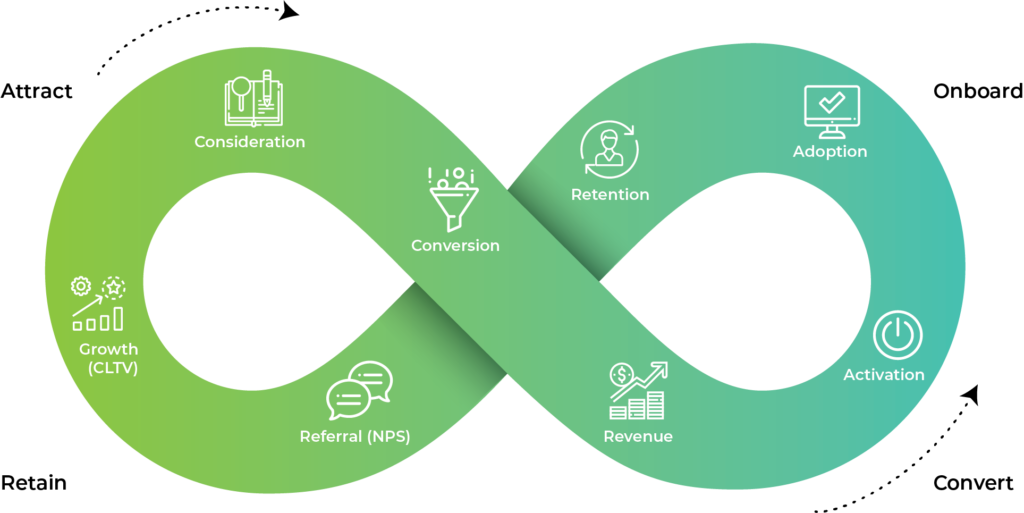
Here’s a sample scenario to better tell the story of customer lifecycle marketing.
Phase 1: Acquire your customer
Your ideal customer starts the journey by searching for a solution to their problem. You show up during their research in the form of a blog article. They’re excited because your content is exactly what they need! Impressed, they sign up for your call to action which includes a video series. They happily provide their contact info because you saved the day—time to continue this budding relationship through a series of informational emails.
Phase 2: Engage your customer
After the emails, your customer tests the waters by signing up for a trial offer. Thanks to the great support from your sales team, the customer buys a yearly commitment. You provide additional value through more tutorials and an onboarding process that helps them transition easily. Since you want them to use your product daily, you provide exceptional outreach to proactively reduce the likelihood that this customer will churn.
Phase 3: Retain your customer
In B2B sales, you have to keep your customer happy and engaged so they’ll renew each year. You keep open lines of communication so you can manage any objections or problems with your product. You seek their input through short surveys and remind them of your loyalty program which comes with some nice rewards.
All this work is paying off because they’re singing your praises through word-of-mouth and written product reviews. You even use them as a case study and offer an affiliate program. This customer is now your defacto sales rep! That’s the benefit of lifecycle marketing – especially for the B2B customer lifecycle.
The numbers back this up:
Acquiring a new customer costs 5–25 times more than retaining an existing one, and businesses see a 60–70% success rate selling to existing customers compared to just 5–20% with new prospects.
That’s not a small gap — it’s the economic case for lifecycle marketing in a single statistic.
What Are the Best Lifecycle Marketing Strategies for B2B?
Essentially, customer lifecycle marketing aims to keep your customer in an infinite loop instead of a dead-end linear plan that requires multiple touchpoints. This ensures your customer feels valued, which keeps them interested in your content. These best practices can help you reach those goals:
| Strategy | What It Does |
| Personalized Messaging | Triggers automated outreach based on customer behavior (e.g., pricing page visits) |
| Onboarding Education | Reduces confusion with in-app tutorials, welcome videos, and guided setup |
| Live Chat & Help Resources | Provides immediate support through chat, knowledge base, and forums |
| Behavioral Reporting | Identifies churn risks and upsell opportunities through usage data |
Messaging
Each page a potential customer lands on could trigger a unique automated message. One message may go to a person who has visited your pricing page but left without buying, and another to a person who has visited your website many times over a short period of time.
Educate during onboarding
Keep the confusion to a minimum by having in-app help messages and tutorials that guide them along the way. A welcome video message will make the new customer feel more connected to your brand, especially if it is coming from the CEO or owner.
Live chat and other help offerings
Your customer wants immediate help which can be offered in the form of live chat or AI-powered chatbots. A searchable knowledge base and forum can add another layer of confidence for the user. Your customers have different ways of learning so offering different ways to find an answer is important.
Reporting
Review users’ activity to study behavior that will guide you in your messaging. Being proactive can identify churn risks of low users or upsell opportunities for active users.
Each phase of the Customer Lifecycle Marketing journey requires different content and strategies. This content needs to speak to the ideal customer you have in mind and provide answers to their questions.
All content you create should focus on benefits to the customer, not the services you provide – at least in the first stages of the journey. It can be said that you are never done selling, but it may be more accurate to say you are never done educating and nurturing.
From customer lifecycle marketing to specialty B2B lifecycle marketing, Peer Sales Agency can help you keep your customers in the loop. Want to discuss your marketing and sales strategy? Reach out to our team.
Customer Lifecycle Marketing FAQs
Customer lifecycle marketing is a strategy that targets customers with relevant content and communication at every stage of their journey — from awareness to purchase to long-term retention and advocacy.
The main stages are Acquire (attracting and converting new customers), Engage (delivering value and building loyalty post-purchase), and Retain (keeping customers happy, renewing, and referring others).
The key benefits include higher customer retention rates, lower churn, increased lifetime value, and turning existing customers into brand advocates who generate referrals and reviews.
Traditional marketing often focuses on acquisition and stops after the sale. Lifecycle marketing treats the customer relationship as continuous, with strategies for every phase — including re-engagement and loyalty building.
Effective B2B lifecycle strategies include automated email nurture sequences, personalized onboarding, proactive customer success outreach, loyalty programs, and using satisfied clients as case studies or referral sources.