
Outbound prospecting is back. Some are doing it right, and I’m willing to bet your LinkedIn DMs are full of people doing it wrong.
How many times have you heard a great salesperson described as a “real hunter?” It’s an apt comparison. In nature and in sales, there are two types of hunters: the ambush hunter that springs on their prey suddenly, and the endurance hunter who patiently walks their quarry down.
Every time you’ve opened your LinkedIn InMails or your corporate inbox to be bombarded with meeting requests and hard sales pitches, you’ve been ambush hunted. How many of those emails or meeting requests have you responded to with more than “no thanks” or “unsubscribe?” I’m willing to bet that number isn’t high. In fact, less than 1% of cold LinkedIn messages actually book a meeting.
The pursuit of predictable revenue from outbound means shifting your mindset to that of persistence hunting. Being methodical, focusing on quality over quantity, and playing the long game is the way you keep the top of your funnel full enough to run a real revenue engine.
Outbound is now an essential for sustainable growth in the mid-market. Unlike smaller businesses that can rely on a few key deals or massive enterprises with extensive inbound resources and brand names working in their favor, mid-market companies need a scalable, repeatable system.
Without it, revenue will fluctuate wildly, making forecasting and strategic planning difficult. A well-oiled outbound engine provides control, allowing sales teams to proactively influence pipeline generation and revenue outcomes.
Why Proactive Outbound is Essential for Sustainable B2B Growth
While inbound marketing attracts interested leads who are closer to a buying decision, inbound alone often struggles to consistently fill the pipeline. With only 2-5% of your given buyers in the market for a solution right now, the volume of interest simply isn’t in your favor with inbound tactics alone.
As recent studies highlight, 50% of companies that can forecast pipeline contributions see significant revenue increases, compared to only 16% of those that cannot. That’s the benefit of an outbound engine. It allows businesses to target specific accounts, problems, or industries in a strategic way. Plus, you get the opportunity to engage prospects who may not yet be actively searching, getting in the door as a trusted advisor before your competitors. Outbound helps you control the pace and quality of lead generation, too.
Laying the Foundation: Defining Your Predictable Target
So, now you know you need it. Before launching your outbound efforts, you need a few things to push off from a solid foundation. You need to know a lot about your ideal customer and how they make purchasing decisions. You need to know who’s on the buying committee and how much influence they have. And you need to know all their pain points, problems, and the buttons to push. Without this clarity, your outreach efforts will likely be scattered, inefficient, and largely ineffective. This foundational work keeps every subsequent action – from data acquisition to messaging – precisely aligned with your business objectives and market realities.
Crafting Your Ideal Customer Profile (ICP) for Mid-Market Fit
An Ideal Customer Profile (ICP) is a detailed description of the type of company that derives the most value from your product or service and is therefore most likely to become a successful, long-term customer.
For mid-market businesses, this means going beyond broad industry classifications. Research your most profitable, loyal, and referenceable customers. Analyze their industry, company size (revenue and employee count), geographic location, technology stack, and any specific challenges or growth opportunities they face. Collaboration between sales and marketing teams is crucial here to ensure the ICP reflects both market opportunity and sales viability.
Go deep into the process with CEO, Sara Hanlon, in this how-to article.
Understanding Your Buyer Personas and the Full Buying Committee
Within each target account defined by your ICP, there are people, individuals who influence or actually make the purchasing decision.
Buyer personas represent these individuals, detailing their roles, responsibilities, motivations, pain points, and daily challenges.
For instance, a persona for a Head of IT might focus on integration and security, while a persona for a CFO would prioritize ROI and budget. Researching these personas involves analyzing LinkedIn profiles, conducting interviews with existing customers in similar roles, and understanding common job titles and responsibilities within your target market.
Crucially, for mid-market deals, you must identify the entire buying committee—including decision-makers, influencers, and gatekeepers—to tailor your outreach and messaging effectively to each stakeholder.
Here’s how to create B2B buyer personas.
Strategic Account Segmentation and Tiering for Maximized Effort
Great! You have a list of target companies and a list of the people who shape buying choices within those organizations.
Time to email?
Not yet.
The fact is, not all accounts within your ICP are created equal. Strategic account segmentation and tiering are vital for mid-market companies to focus resources efficiently.
Categorize your target accounts based on their awareness of your solutions, potential value, strategic importance, or likelihood to purchase:
- Tier 1 accounts might be large enterprises where you already have a sales-qualified lead or two, with significant deal potential, requiring a highly personalized, high-touch approach.
- Tier 2 accounts could be smaller but still strategically important, warranting a more scaled but still personalized outreach. This is probably a list of brand-aware marketing-qualified leads.
- Tier 3 might represent a broader segment for more automated engagement. This is usually a cold outreach list pulled from an outbound source or other research tool.
This tiering ensures your sales teams invest their time and effort where it will yield the greatest return, preventing wasted activity on less promising prospects.
Fueling the Engine: Building a Signal-Rich Prospect Database
Engines need fuel. A predictable outbound engine is fueled by high-quality data and intelligent insights. Building and leveraging a prospect database goes beyond static contact lists, using dynamic signals to ensure timely and relevant outreach.
The Shift to Data-Driven Prospecting: Quality Over Quantity
The era of mass email blasts is over.
Effective outbound prospecting today hinges on data-driven strategies that prioritize quality over sheer volume. You can utilize tools like Apollo.io or similar platforms to build lists of high-quality buyers within your ICP.
Look for companies exhibiting product-fit intent signals – indicators that someone in that company is actively researching solutions like yours or experiencing problems your offering solves. Beware! High-intent buyers may be deeply down funnel with another provider, and you may not have the level of success here that you’d expect. Choose the right signals and topics of interest that align with the pains and problems at the middle-of-funnel.
This way, your outreach goes to the right people at the right time, significantly increasing the likelihood of getting a more meaningful reply than “unsubscribe.”
Integrating Intent and Trigger Signals for Timely and Relevant Outreach
Leveraging intent and trigger signals transforms outbound prospecting from a guessing game into a precise science. Intent data reveals which companies are researching specific topics related to your solution. Trigger events – such as funding rounds, key executive hires, new product launches, or significant news – indicate a company is undergoing change, making it more open to new solutions.
By integrating these signals, your sales teams can identify precisely when and how to engage qualified outbound prospects. For example, if a target account shows intent in cloud migration and recently announced a digital transformation initiative, it’s a prime opportunity for relevant outreach.
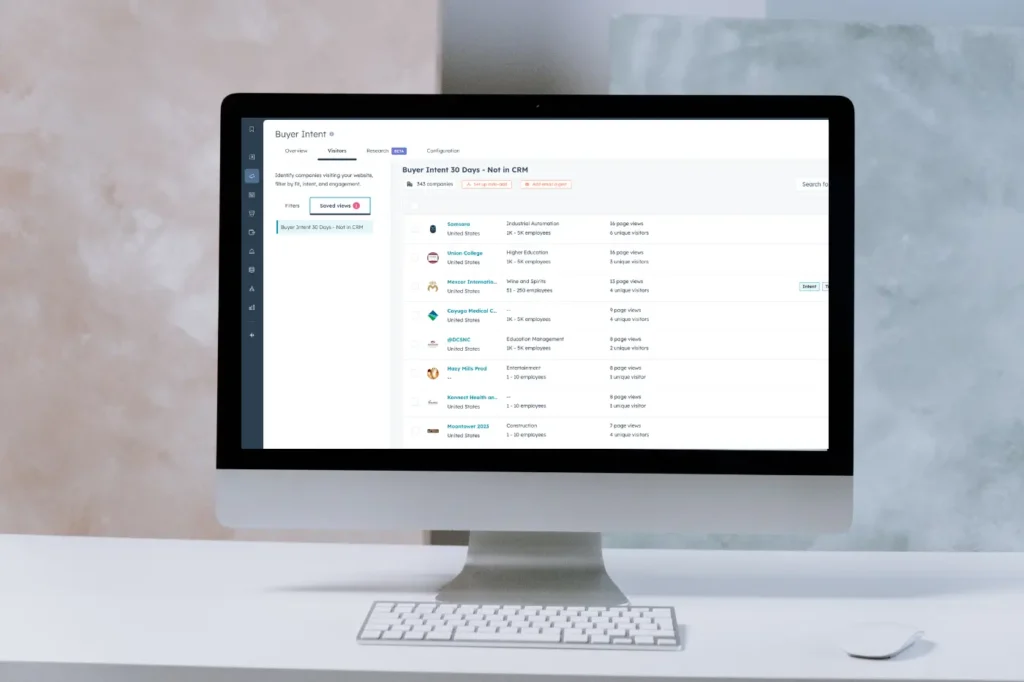
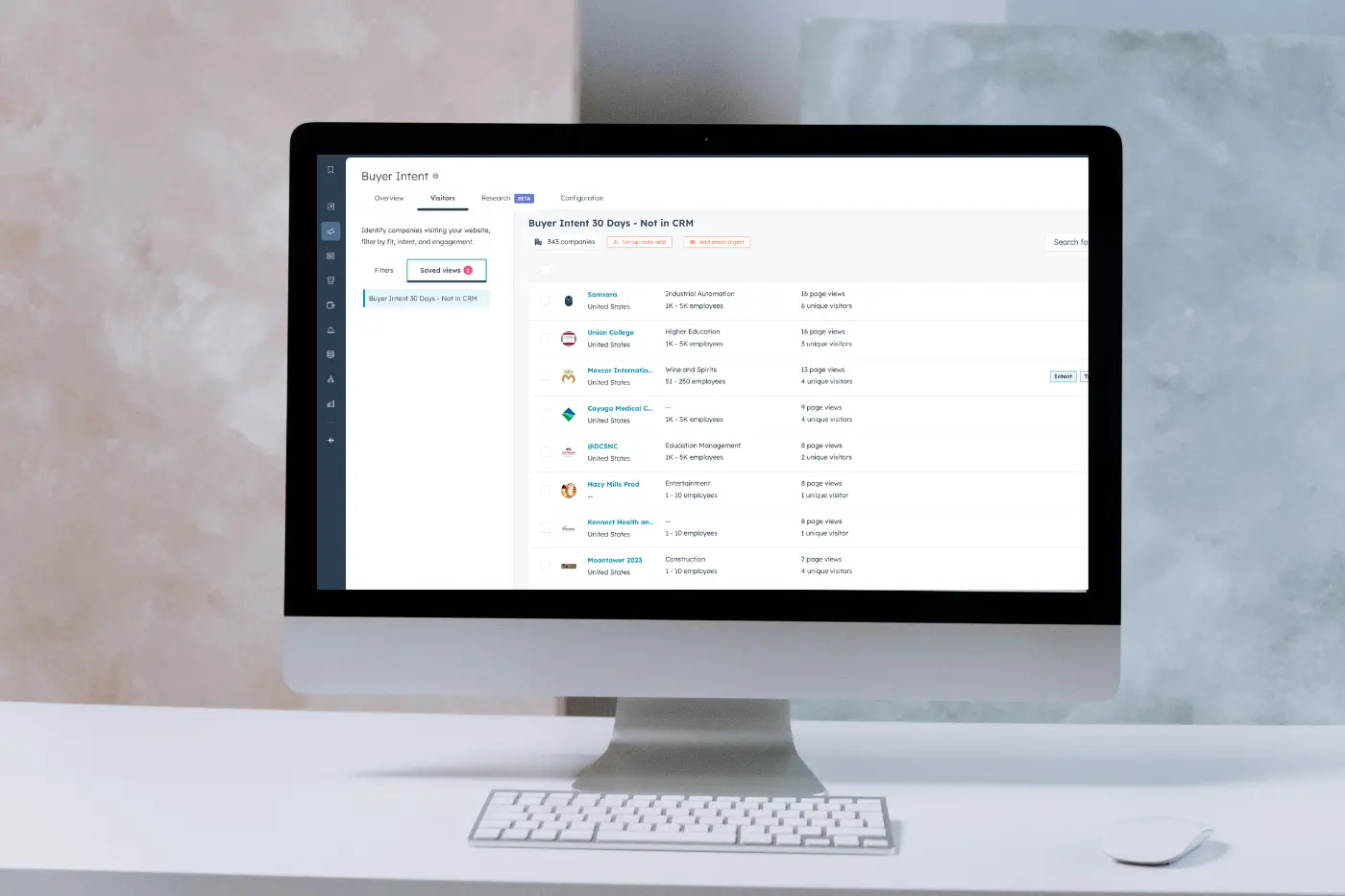
Check out HubSpot’s Buyer Intent tool here.
Operationalizing Your Prospect List: Implementing a Repeatable Outbound Rhythm
Once your signal-rich prospect database is curated, operationalizing it is key to building predictability.
Define daily and weekly outreach targets for your sales teams, specifying the number of calls, emails, and LinkedIn messages to be sent. This rhythm ensures that your entire addressable market receives consistent touchpoints over time, without overwhelming prospects. Work with your marketing team to create campaigns that provide relevant touchpoints using social media, paid advertising, and email marketing campaigns.
By prioritizing outreach based on intent signals and account tiering, you create a structured, efficient process that maximizes the impact of your sales efforts and builds a predictable pipeline velocity.
Crafting the Message: Personalized Multi-Channel Outreach
Effective outbound prospecting today is a blend of strategic targeting and compelling, personalized communication across multiple channels. You need to warm up prospects and deliver messages that resonate with their specific needs and pain points.
From Cold Outreach to Warm Outbound Before the Ask
The term “cold outreach” often carries a negative connotation. The goal is to move towards “warm outbound” by building rapport and providing value before directly asking for a meeting or sale. B2B sales are relationship-based, and your sales team should be seen as a trustworthy expert who does more than push your solution.
You’ll want to surround your prospects in messaging that piques their interest and provides little brand deposits before the sales team hits their inbox or InMails.
Paid media and targeted advertising campaigns can increase brand awareness and familiarity within your target market before direct outreach. Engaging in industry forums, Reddit threads, webinars, and trade shows allows for face-to-face interaction and establishes credibility. Sharing valuable content on platforms like LinkedIn can position your sales team as thought leaders, making your subsequent outreach feel less intrusive and more consultative.
Developing Your Core Sales Messaging Framework
A robust sales messaging framework ensures consistency and effectiveness in your outreach. This framework should articulate your value proposition clearly and be adaptable to specific buyer personas and their acute pain points.
Instead of generic pitches, develop messaging matrices that detail how your solution addresses the core challenges faced by different roles (e.g., the Head of Sales, the Operations Manager).
For instance, if your product automates reporting, the messaging for a sales leader might focus on increased visibility and forecast accuracy. For an operations manager, it might highlight time savings and reduced manual errors. Personalization, informed by your ICP and buyer persona research, is the best way to get engagement.
Engineering the Flow: Structured Sequences and Follow-Ups
Consistency and persistence are hallmarks of successful outbound prospecting. Here’s how to structure your outreach efforts through sequences and master the art of follow-up to keep your pipeline moving.
Designing Outbound Sequences That Create Predictable Pipeline
Outbound sequences are pre-defined series of touchpoints designed to engage prospects systematically.
Best practices involve a multi-channel approach, incorporating email, LinkedIn messages, and phone calls. Sequences should be tailored to the prospect’s tier and persona, using all the information we discussed above. Automation tools are invaluable here for managing the cadence and ensuring no prospect falls through the cracks, leading to more next-step conversations.
Start with a compelling value proposition, then introduce educational content or relevant case studies in subsequent steps.
Critically, sequences must include clear calls to action and a tangible, actionable, desirable offer. Whether you want the prospect to book a discovery call, download a resource, or simply reply with interest, they need to know what’s in it for them.
Don’t go out with nothing to offer. No one wants another meeting on their calendar without a clear benefit.
The Art of the Follow-Up: Persistence, Value, and Avoiding Pushiness
Effective follow-up is crucial for converting initial interest into meaningful engagement. It’s about demonstrating persistence and offering continued value without becoming a nuisance.
- Do:
- Follow up consistently based on your predefined sequence.
- Add value with each follow-up by sharing relevant articles, insights, or case studies.
- Reference previous conversations or points of interest.
- Personalize each follow-up based on new information or engagement.
- Use a clear, concise call to action.
- Don’t:
- Send generic, repetitive messages.
- Demand a response or apply undue pressure.
- Lose track of your cadence and send too many or too few touches.
- Forget to track your follow-up efforts in your CRM.
- Send the same message repeatedly without adding new context.
Measuring Success: KPIs, Optimization, and Continuous Growth
To build a truly predictable engine, continuous measurement and optimization are non-negotiable. These are the key metrics that define success and how to leverage them for ongoing improvement.
Defining Key Performance Indicators (KPIs) for Outbound Predictability
To evaluate the efficacy of your outbound engine, track a range of marketing and sales KPIs.
Essential metrics include the number of qualified leads generated, the conversion rate from prospect to meeting booked, and from meeting booked to opportunity created.
Pipeline velocity—the speed at which deals move through the sales stages—is also critical for predictability. You should also track metrics like email open and reply rates, LinkedIn connection acceptance rates, and the overall health of your pipeline value and forecast accuracy.
These KPIs provide actionable insights into what’s working and where adjustments are needed. Where your KPIs aren’t meeting benchmark standards, make adjustments. For example, if your open rates are poor, review your subject lines. If your connection rates are lackluster, check your audience targets, review your public profile for red flags, and add value to make it clear you’re not here to spam in the connection request message.
Aligning Sales and Marketing for a Unified Go-to-Market Strategy
A truly predictable outbound engine thrives on seamless alignment between sales and marketing teams.
Marketing generates awareness, warms up your prospect list, and commands interest through content and campaigns, while sales engages prospects directly. Marketing can provide valuable insights into market trends and campaign performance, informing sales messaging.
Sales, in turn, can provide feedback on lead quality and prospect engagement, allowing marketing to refine its targeting and messaging. This unified approach ensures a consistent customer experience and maximizes the effectiveness of the go-to-market strategy, driving predictable revenue growth.
Deep Dive: How Successful Companies Generate Revenue From Marketing
Scaling Your Predictable Engine: From Pilot Program to Full Implementation
Building a predictable outbound prospecting engine is an iterative process. Start with a pilot program, testing your ICP, personas, messaging, and sequences with a defined segment of your market. Measure results rigorously, gather feedback from your sales teams, and refine your approach.
Once you achieve consistent positive results and a predictable pipeline flow, begin scaling. This involves expanding your outreach to broader segments, potentially leveraging automation and AI technologies. (Gartner predicts that 60% of B2B seller work will be done by generative AI technologies by 2028, underscoring the importance of integrating intelligent tools for enhanced efficiency and personalization.)
As you scale, maintain rigorous performance tracking and foster a culture of continuous improvement to keep your engine firing on all cylinders and your pipeline robust and predictable. The journey from initial outreach to predictable revenue requires strategic planning, data-driven execution, and a commitment to ongoing optimization.
Above all, stop ambushing your prospects and expecting an immediate sale. Be persistent and patiently walk those deals down.
Frequently Asked Questions
Outbound processes drive business growth by proactively creating opportunities. They allow companies to target specific customer segments, generate leads that might not have otherwise discovered them, and control the narrative and pace of engagement, ultimately leading to a more predictable pipeline and revenue stream.
An effective strategy involves defining a precise ICP, segmenting accounts by tier, using intent and trigger signals to identify opportune moments, and executing personalized, multi-channel outreach sequences with consistent follow-ups. For instance, reaching out to a company showing intent for CRM solutions right after they’ve announced a hiring spree for their sales team.
To do outbound prospecting, begin by clearly defining your Ideal Customer Profile (ICP) and buyer personas. Build a high-quality prospect database, leveraging intent and trigger signals. Develop personalized messaging tailored to their pain points and use a multi-channel approach (email, LinkedIn, phone) within structured sequences. Implement a consistent follow-up strategy and meticulously track your results.
To increase both outbound and inbound leads, a comprehensive approach is key. For outbound, focus on data quality, personalization, and leveraging signals. For inbound, create valuable content that addresses customer pain points and optimizes for search engines. Crucially, align sales and marketing teams to ensure a cohesive go-to-market strategy, where insights from one channel inform the other, creating a synergistic effect on lead generation.